Climate Breakfast on a Key Climate Solution for Industry and Waste
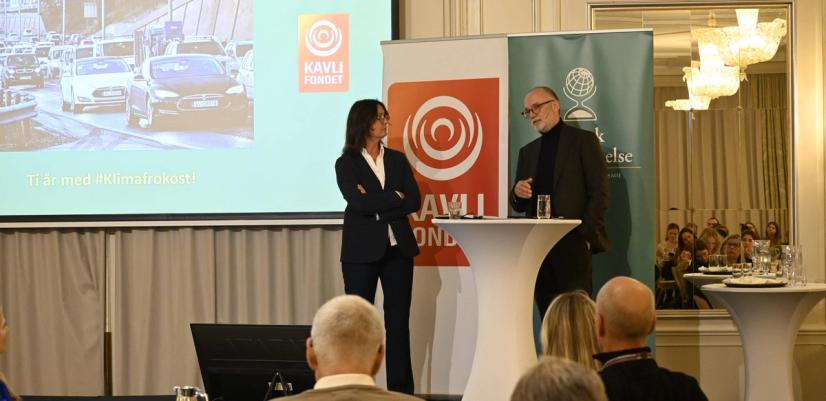
With support from the Kavli Trust, the Norwegian Climate Foundation invites you to a Climate Breakfast in Bergen on Friday, November 29, from 08:00–10:00. This time, the theme is: What will it take to accelerate carbon capture and storage as a climate solution
“Figures so far this year show that global greenhouse gas emissions unfortunately continue to rise. For some sectors, such as the power sector and the transport sector, climate solutions are relatively easy to understand and implement. For other sectors, such as industry and the waste sector, the solutions needed to reduce emissions may appear far more complex. But industry and the waste sector must also gradually reduce their emissions toward zero. At this autumn’s final Climate Breakfast, we will therefore address the absolutely necessary climate solution of carbon capture and storage. This solution can ensure that industry and the waste sector can also move toward zero emissions over time,” says Anne Jortveit, project manager for Climate Breakfast.
According to the UN’s Intergovernmental Panel on Climate Change (IPCC) and the International Energy Agency (IEA), carbon capture and storage (CCS) and carbon dioxide removal (CDR) are crucial to achieving the goals of the Paris Agreement. For certain emission sources, such as waste incineration plants, it is difficult to envision other solutions for eliminating emissions.
“Yes, carbon capture and storage is in many ways mature technology, but in practice high costs are slowing deployment. At this Climate Breakfast we therefore ask: What will it take for this climate solution to be implemented at a scale that truly makes a difference in emission figures? Where are the bottlenecks in the value chains? And what will it take for Norway to play an important role in the emergence of a global CCS market?”
Western Norway, Øygarden and Northern Lights
“This year, Norway opened the world’s first commercial facility for the transport and permanent storage of CO₂ beneath the seabed through the Northern Lights project outside Øygarden. This project will be presented at the breakfast. Overall, a great deal is happening in Western Norway when it comes to carbon capture and storage, both in industry and research. We also have BIR, one of Norway’s largest waste management companies, owned by several municipalities in Western Norway, which is working to capture and store its emissions – BIR will also be featured at our Climate Breakfast,” says Jortveit.
At the breakfast, the Foundation’s research editor Lars Ursin will also present the Foundation’s new thematic brief, “Carbon Capture and Storage and Carbon Dioxide Removal – Opportunities and Challenges.”
The breakfast will take place on the 9th floor of Media City in Bergen. It will primarily be digital, but a few seats are available in the small auditorium. The Climate Foundation will serve breakfast from 7:30 a.m. for those who wish to arrive early and talk with others interested in the topic.
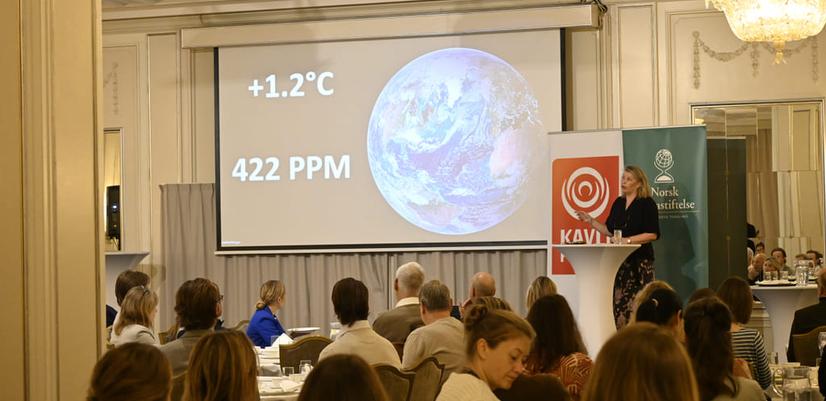

Knowledge-based and constructive
“When we started the Climate Breakfast series ten years ago, both we at the Climate Foundation and many others working to limit the climate crisis had imagined that global emissions would by now have begun to decline. Unfortunately, that has not happened,” says Jortveit.
“We therefore continue to see an enormous need to discuss promising climate solutions – in a knowledge-based, constructive way and in a calm tone. We are therefore very pleased that, thanks to the Kavli Trust, we can once again invite participants to breakfast focused on a climate solution that still needs support from policymakers, industry, and research.”
“We also look forward to hearing from Member of Parliament and former Minister of Climate and Environment Sveinung Rotevatn. He has followed the development of the carbon capture and storage value chain and will elaborate on how policy, in cooperation with industry, can accelerate the deployment of CCS,” says Jortveit.
Preliminary Programme
- Why do we need CCS and CDR? Fact-based overview by Lars Ursin, Research Communications Editor at the Norwegian Climate Foundation.
- Capture, storage and removal of CO₂ – how the technologies work. Presentation by Mona Mølnvik, Research Director at SINTEF.
- Are the UN and IEA’s scenarios for CCS and CDR realistic? Why have we not been able to scale up CCS technology at the pace we need? What will it take to make carbon capture and storage profitable? What can we learn from the mistakes we have made so far? Presentation by Tsimafei Kazlou, PhD candidate at the University of Bergen.
- Northern Lights: The world’s first commercial CO₂ storage facility opened earlier this autumn in Øygarden outside Bergen. When fully developed, Northern Lights will store 5 million tonnes of CO₂ per year. Presentation and conversation with Communications Manager Benedicte Staalesen.
- What will it take to accelerate CCS as a climate solution in the waste sector? Status and bottlenecks. By Atle Tvedt Pedersen, CEO of BIR Ressurs AS.
- Participants in the political discussion panel include Member of Parliament, former Minister of Climate and Environment, and Deputy Leader of the Liberal Party (Venstre), Sveinung Rotevatn.
- Summary by Lars-Henrik Paarup Michelsen, CEO of the Norwegian Climate Foundation.
The programme will be updated continuously.