Creating history with a unique health research programme
The health research programme has now concluded and no new research funding will be announced in 2025. We will announce on our website when a new programme begins.
172 million kroner. 20 research projects. And a unique collaboration between two foundations.
The collaboration between the Kavli Trust and the Dam Foundation regarding the former's health research programme is now drawing to a close.
The result is a total of 172 million kroner allocated to 20 different research projects at prestigious institutions such as the British University of Oxford, Sweden's Karolinska Institutet, and Norway's Norce.
All projects are designed to fill carefully selected knowledge gaps in children and young people's mental health. And not least, two foundations enriched with valuable lessons and words of praise for one another, following eight years of collaboration.
Research with great value for users
The collaboration came about after the then-CEO of the Kavli Trust, Inger Elise Iversen, saw a presentation by programme director Jan-Ole Hesselberg on wasted health research at Dam's research seminar in 2016.
She invited him to speak to the Kavli Trust's board. They acted swiftly and entered into an agreement to establish and operate the programme.
– The Kavli Trust took the initiative for the collaboration because we wanted to ensure that the Trust's funds went to health research with real practical value for users. In the Dam Foundation, we found a competent partner who shared our goal of ensuring that research funding creates the greatest possible benefit for the groups that will use the research, says CEO of the Kavli Trust, Ingrid Paasche, adding:
– We also wanted assurance that the money was going to research in a field with great funding needs.
– I am proud of the collaboration we have had with the Kavli Trust. It demonstrates the power of how openness and cooperation can help both parties to develop, says Secretary General of the Dam Foundation, Hans Christian Lillehagen.
Ensuring useful research
The purpose of the health research programme has been to contribute to research that benefits users, clinicians and research communities alike. The programme follows a design where all parties are heard, and where the funds are intended to close existing knowledge gaps.
– There is an enormous difference between good and mediocre research. The objective of the Kavli Trust's health research programme was to ensure that the research was useful and relevant to the end user, says Dam's programme director, Jan-Ole Hesselberg.
He has been responsible for both the design and implementation of the health research programme.
– All actors in health research – researchers, funders and users – have vested interests, which can conflict with good research. The programme was therefore designed to distribute influence among the key stakeholders. This is how we ensured relevant and useful research, he says, adding:
– It turns out that the research that researchers are interested in is not always perceived as relevant by those who are meant to benefit from it. If end users are not interested in the interventions being researched, you have a problem.
International standard
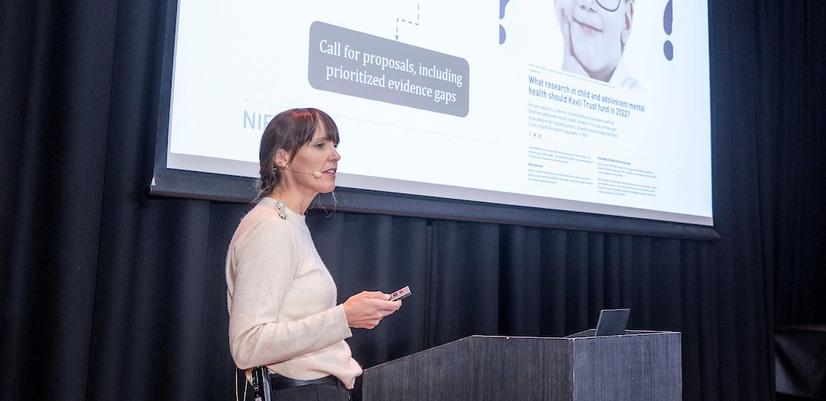
Each year, both subject experts and users have therefore been involved in identifying new knowledge gaps in children and young people's mental health. These then form the basis for the funding call, and all projects receiving support through the programme must address one or more of them.
The application process is structured as a two-stage model, where applicants first submit a brief outline proposal, which is assessed by the expert committee. Around ten projects are then invited each year to submit a full application.
– I am proud that we have managed to create such a thorough and cost-effective process in which all the key stakeholders are heard, says Hesselberg, adding:
– I am impressed that the Kavli Trust's board chose to relinquish some of their power in favour of a decision-making process that I would describe as being of international standard.
A success
The two foundations share a common goal of helping to prevent wasted health research. The programme has provided learning for both parties. Among other things, Dam has also introduced a two-stage process in its own research programme. The effect of this was documented in a research article in 2024, which shows that both researchers and peer reviewers save considerable time using this method.
Requirements for pre-registration and open publication have also helped ensure that useful, needs-identified research benefits both professional communities and users.
– Together we have created an innovative, open and highly successful health research programme that has delivered in line with our shared objectives. Even though the programme has now concluded, the work and results that have come out of this collaboration will continue to provide value for many years to come, says Paasche.
Hoping others will learn
Paasche believes the health research programme is a shining example of what is possible through collaboration.
– None of us could have done it alone. At the Kavli Trust, we want to promote constructive collaboration both with other foundations and across disciplines and sectors. With complementary strengths and aligned goals, we can achieve much more together than separately, she says, with support from Dam's Hans Christian Lillehagen.
– The projects that have received funding are helping to close important knowledge gaps. The method has proven powerful and relevant. I hope many will find inspiration in eight years of work, says Secretary General Hans Christian Lillehagen.
– I hope other funders see the opportunities that exist in this process, and we are happy to share our experiences with anyone interested, says Jan-Ole Hesselberg.
The health research programme has now concluded and no new research funding will be announced in 2025. We will announce on our website when a new programme begins.