Knight of the Seven Mountains
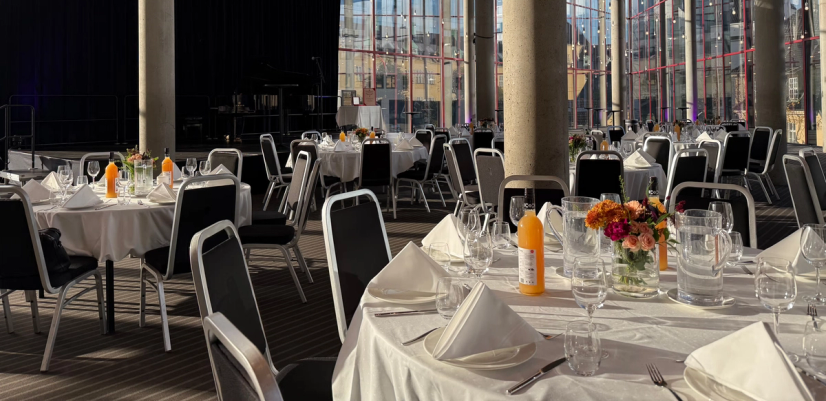
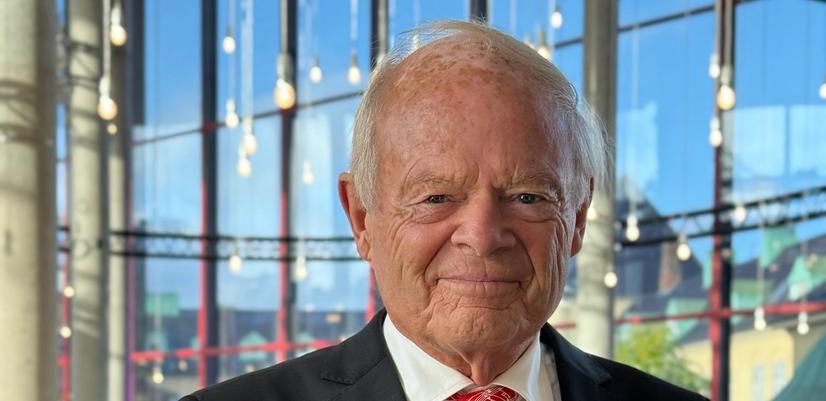
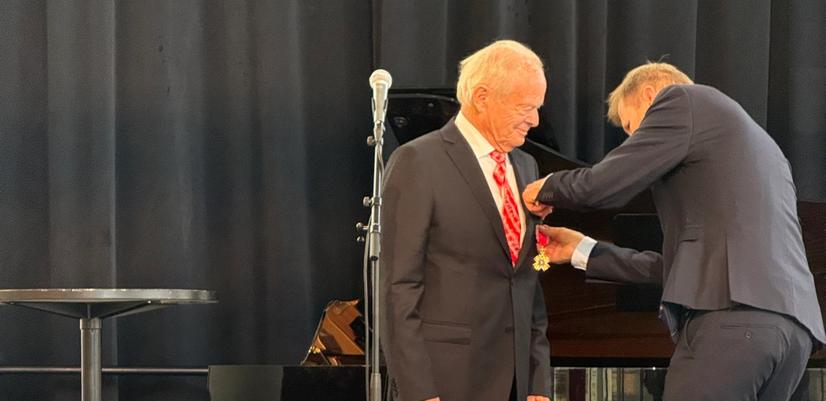
Former Chair of the Kavli Trust, Supreme Court lawyer Pål W. Lorentzen, has been appointed Knight First Class of the Order of St. Olav for his contributions to freedom of expression and the rule of law. The honour was celebrated at Grieghallen on 3 November.
A bridge-builder between institutions and people
Supreme Court lawyer. Amateur trumpeter. Culture enthusiast. West Coast patriot. Defender of free speech and a committed voice in the climate debate. Through a long career, he has moved effortlessly between law, culture, and social development.
He has held a wide range of senior board positions across finance, offshore, aquaculture, fisheries and industry. At the same time, he has stood firmly in the cultural sphere as chair of the Bergen Philharmonic Orchestra, the Bergen International Festival, Bergen National Opera, the Edvard Grieg Choir and the Western Norway theatre.
For him, culture is more than recreation – it is a space for voices, belonging, and identity.
Kavlifondet
Culture as an identity-builder
In the speeches honouring him, his commitment to young voices and cultural life stood out. Lorentzen himself sees a clear link between participation in cultural activities – choir, theatre, music – and the Kavli Trust’s work to strengthen the mental health of children and young people.
“Joining a choir is more than culture – it’s public health. Through community, rhythm and voice, children develop confidence, mastery and the ability to express themselves. It’s a gift they carry with them for the rest of their lives,” he says.
For today’s young people, who often sit alone, using their voice – quite literally – can be a powerful way to build identity.
“Look at the Edvard Grieg choirs: more than 200 singers starting at five or six years old, growing up in a system that gives them both belonging and development. It’s about finding your voice – and being heard.”
For Lorentzen, the leap from children’s singing voices to society’s larger conversations is small. Expression and freedom of speech are fundamentally linked.
Foundations and the free conversation
Throughout his career, Lorentzen has played key roles in major legal disputes in the oil and offshore sectors, but it is his work for freedom of expression that has secured him a central place in Norwegian legal history.
“This freedom is under pressure,” he says. “Actors, both public and private, increasingly try to control what information reaches people, and how it is presented.”
This is why he believes foundations have a crucial role to play today.
“Foundations can help protect the free conversation and support independent journalism, research and culture that promote critical reflection. In a society where information is increasingly filtered, we need independent actors who dare to keep the room open.”
Legg inn tittel her
Kavlifondet
A West Coast patriot with an eye for society’s needs
Lorentzen is known as a pioneer in the climate field. In 2010, he founded the Norwegian Climate Foundation and Initiativ Vest – two foundations created to counteract centralisation and strengthen the voice of Western Norway in national debates. His reflections on the role of foundations are therefore especially relevant:
“The foundation model can be both a strength and a challenge,” he says. “When the world changes, foundations must keep pace – without losing sight of their core purpose. The regulatory framework doesn’t always keep up, and that requires boards that dare to think ahead. Especially for corporate foundations like the Kavli Trust, where social purpose and business operations meet, this dynamic becomes decisive. Staying true to a foundation’s intention isn’t about standing still – it’s about interpreting the purpose in a new time.”
The role of foundations in civil society
“Foundations can be independent bastions in society,” he says. “Their contribution to health research and elder care is undeniable. In turbulent times like these, that independence becomes even more important. Foundations need a financial base that allows them to fulfil their mission without depending on public funding. That’s why they are perhaps more important than ever – as free actors able to work long-term and pursue their purpose regardless of political shifts.”
The door of opportunity
For 45 years, Lorentzen has lived in Villa Utsigten with his wife Helga and their two children, Erle and Benedicte. Their front door is his old office door from Torgallmenningen – and it holds a special place in his heart.
“That feeling of expectation when you grasp the door handle is the same whether you’re coming home or heading out into the world. Everyone should have a door like that.”
“It’s about safety and curiosity at the same time,” he says. “I believe foundations like the Kavli Trust help create exactly that – giving more young people a door to the world.”
The Kavli Trust congratulates Pål W. Lorentzen on a well-deserved honour – and thanks him for his contribution to shaping the Trust into the societal actor it is today.