From Bergen to Boston with Treatment for Anxiety and OCD
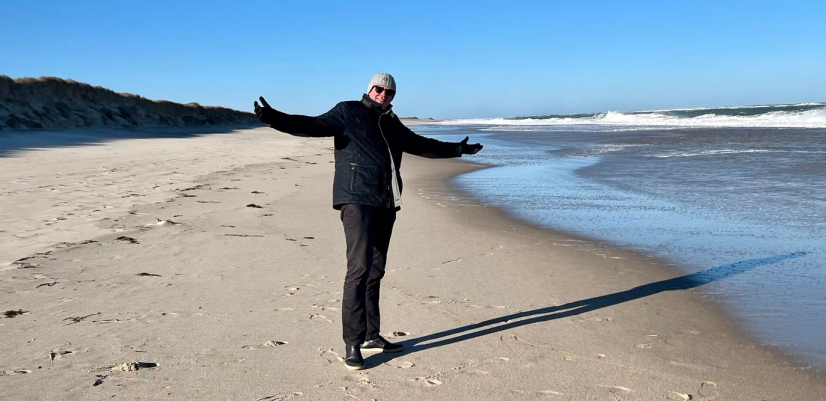
By the sea
Private
With support from Kavli Trust, patients worldwide now have access to the 4-Day Treatment for anxiety and obsessive-compulsive disorder (OCD). Bjarne Hansen, Professor of Psychology at Haukeland University Hospital, regularly writes for Kavli Trust about the international efforts to spread the treatment.
Recently, he was in Boston to train healthcare professionals in the USA, and on the flight home he wrote this text about one of the things that surprised him the most: how similar we humans are—both in terms of the development of anxiety and OCD, and fortunately, also in our ability to break the pattern and regain a good life with the right treatment.
By Bjarne Hansen, Professor and Project Leader, Bergen Center for Brain Plasticity and the OCD Clinic at Haukeland University Hospital
Much is now taking shape, both in the work of training new clinics on new continents and in adjusting the direction and framework for our research back home. In this regard, the recent days traveling to Boston have been invaluable!
For anyone wondering how to get better sleep on work trips, my best answer right now is that it’s quite unpredictable. However, I’d like to emphasize that even days with somewhat restless sleep can still turn out quite well—just like the last few days have for me.

Named after
Bjarne Hansen
Important milestone
Much is coming together now, both the work of training new clinics on new continents and the effort to adjust the direction and framework of our research at home. In this regard, the recent days spent traveling to Boston have been invaluable!
Over the past few years, we have trained teams so that 54 clinics in Norway now offer the 4-day treatment for anxiety and obsessive-compulsive disorders (OCD). We have also had the opportunity to train clinics in several other countries.
Read more: Treated anxiety and OCD in four countries
Now that those we have trained are joining and contributing to training new clinics, this marks an important milestone in ensuring the sustainability of the work beyond the project period, made possible through invaluable support from Kavli Trust and outstanding backing from employers at Haukeland University Hospital and the University of Bergen.
Becoming available on all continents this year
To put it in plain terms, this is simply quite impressive. This practically means that this year we will achieve our goal of making the treatment available on every continent.
We now look forward to the upcoming work with great colleagues from Kenya and Ecuador, where most arrangements are now clarified and in place.
Changing perspectives
My views and attitudes toward cross-border and cross-cultural work have been quite challenged. Where I had expected to encounter major differences and obstacles, I have been pleasantly surprised.
Believe it or not, people everywhere share similar thoughts, feelings, and a basic set of tendencies.
This includes a vulnerability to get caught up in thought and emotional loops even when all we want is to push away the discomfort and move forward. We also have the same capacity to recognize and expose deception, to break patterns — though sometimes this requires assistance, often framed as a 4-day targeted team effort.
Time and again, I’ve found myself surprised by this, often feeling quite foolish.
Agreeing with the King: "We usually are the solution"
Of course, that is how it is.
We humans are so alike, and unfortunately, this also seems to apply to tendencies where we create one useless dividing line after another. That we as individuals are different is also something we share and have in common — something that can help bring us together.
At the risk of sounding repetitive, I must give a big nod to His Majesty King Harald, who earlier this year delivered a remarkable speech uplifting US — because WE usually have, and WE usually are, the solution to so many of our times’ small and large challenges. His Majesty King Harald and his speeches are one of two reasons why I wish we could celebrate New Year more often.
There is every reason to account for differences and challenges, but this is mostly about systems, organization, attitudes, and finances — not the fundamental aspects of being human.
Meeting with Bishop Lønning
Many years ago, I was fortunate to have an audience with Per Lønning, who was bishop in the Diocese of Bjørgvin. The occasion was a special assignment I had to write in my second year of high school. The arrangement was made by phone with his assistant.
Lønning assumed he would meet a student looking for input for a doctoral thesis or perhaps at best a master’s thesis. When it became clear that I was just a simple high school student who had flown from Kristiansand to Bergen to get his input and reflections on the theme of “secularization,” he found it quite bold (incomprehensible), but he was happy to share.
I also remember my excellent social studies teacher, Donald Hall, was somewhat taken aback by both my choice of topic and willingness to travel. He thought it was wrong that I had to pay for plane tickets myself, but it was hard to argue that this was a kind of trip the school neither had the tradition nor budget to cover.
The meeting with Bishop Lønning was something else entirely.
I have never before or since had a conversation with someone who spoke at such length, with eyes closed, carefully weighing and considering every single word he ended up sharing.
He gave himself approving nods and smiles every time he felt he had hit particularly well, which was quite often. This may not sound very sympathetic, but it was both memorable and fascinating. He left a strong impression, and I still greatly enjoy the experience — and what he shared.
Quoted Sigrid Undset
One of many things I remember him quoting was Sigrid Undset: “Customs and habits change greatly, everything the times suffer and the beliefs of people change, and they think differently about many things. But the hearts of people do not change at all in all days.”
When this popped up again recently, it felt like a little summary, a red thread, and a realization from working with people who have gotten stuck in painful thoughts and feelings. We are so alike, even though distance, cultural packaging, and language may mislead us into thinking otherwise.
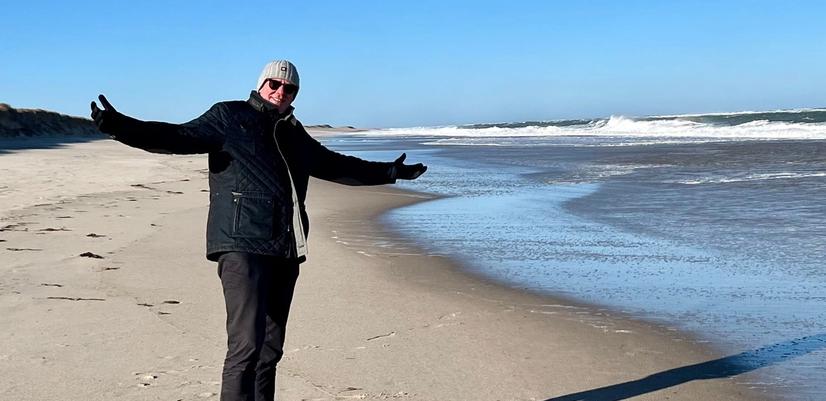
The man by the sea
Private
Ibsen-enthusiast taxi driver in Kenya
When Professor Thröstur Björgvinsson and I recently traveled through one of the less polished parts of Nairobi in a mini-taxi that probably wouldn’t have passed an EU safety test, we experienced something very similar.
When the driver heard I was from Norway, we had a great conversation about his fascination with Ibsen and An Enemy of the People. He believed Ibsen must have had a connection to Kenya or personal experiences there, because he wrote so precisely about timely and local challenges.
It was clear that human hearts are not much different now than they were then, here or there.
Manchester by the Sea
A couple of days ago, Thröstur and I had some free time to drive around the local area. We ended up in Manchester-by-the-Sea, the filming location of the movie with the same name. It was below freezing in this New England tourist and fishing village, well out of season and very different from Kenya and Nairobi. Until Ibsen appeared once again—this time in the form of a boat taken ashore for the winter named Terje Vigen. And there we were again.
The days in Boston have been inspiring, and the support has been invaluable!
A big thank you to Professor Kerry Ressler and Thröstur Björgvinsson, both from McLean Hospital and Harvard Medical School. Also, many thanks for the pleasant company, good advice, and insights from Jeff Szymanski, who until recently was the head of the International OCD Foundation (IOCDF).
Now it’s just about catching a couple of nights of better sleep and looking forward to what comes next!
This is the Bergen 4-Day Treatment (B4DT)
- Bergen 4-Day Treatment (B4DT), also called the 4-day treatment for anxiety and obsessive-compulsive disorders (OCD), was developed by Bjarne Hansen and Gerd Kvale, both professors and clinical psychologists at the University of Bergen and Haukeland University Hospital.
- B4DT is based on cognitive behavioral therapy and consists of four days of individually tailored, intensive exposure therapy in groups, with one therapist per patient.
- Patients can maintain regular contact with their therapist during the period following treatment.
- Several studies have shown that about 90 percent of patients improve significantly after four days, and 70 percent are free of their compulsive disorders and live normal lives four years after treatment.
- These results have been further confirmed in a randomized controlled trial (Launes et al., 2019b).
- Hansen and Kvale have also developed effective training modules to spread the treatment rapidly and cost-effectively across borders.
- Health authorities and institutions worldwide are requesting the treatment.
- In 2018, Kvale and Hansen were named two of the world’s 50 most important health figures by Time magazine for their work on B4DT.
35 million NOK for international dissemination
- In 2018, Kavli Trust awarded 35 million Norwegian kroner to support the international dissemination of B4DT.
- The work will continue over several years and is currently led by Bjarne Hansen, based at the Bergen Center for Brain Plasticity at Haukeland University Hospital.
- The center was established through a collaboration between the Trond Mohn Foundation, University of Bergen, Haukeland University Hospital, and Kavli Trust.
- The Trond Mohn Foundation finances further development of B4DT to adapt the treatment for patients who currently do not benefit from it.
- Kavli Trust has previously funded dissemination of B4DT in areas lacking access in Norway, as part of the foundation’s commitment to mental health among children and youth.
- Bjarne Hansen and his team provide training to healthcare teams and subsequently supervise them in patient treatment. This way, training is combined with actual practice, as well as opportunities to collect data for research.
- The data are used as a research basis to gain more knowledge about how the treatment works, who it does not work for, and why.
- Thus, the dissemination work itself becomes part of the effort to develop new versions of the treatment to help those who do not receive sufficient benefit from the 4-day treatment.
- The international dissemination effort is the largest single research project Kavli Trust has ever supported.
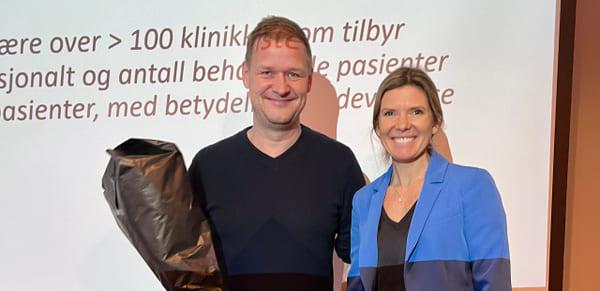
Collaboration
Hanne Eide Andersen/Kavli Trust