Giving parents the tools they need – for the benefit of children and society

Illustrative photo
Maj-Britt Posserud has chosen to dedicate her research career to a field few talk about – and even fewer actually study: how best to support parents of children with autism.
It’s a topic with far-reaching implications – for families, for services, and for society as a whole. But perhaps most importantly: it’s about giving children with autism a real chance to live meaningful lives.
Driven by purpose
Her words come with both empathy and conviction. It’s clear that this is a field Maj-Britt Posserud, child psychiatrist and researcher, truly cares about. She has worked in autism research since 2002, focusing on one of the most complex challenges in society: children’s and young people’s mental health.
“Child psychiatry is like being a detective. You’re solving mysteries every day,” she says with a smile.
A neglected research field
At a time when we invest heavily in advanced medicine and technology, it’s striking how little we actually know about how to best support parents of children with autism. Parental guidance is legally mandated – but in practice, there’s little structured or evidence-based support. That’s something Maj-Britt wants to change.
“We simply don’t know enough about what works. We send parents home with brochures, but rarely give them the tools they actually need. That’s a lost opportunity – for the children, and for society.”
Parents as a key resource
Approximately 1–2 percent of children in Norway have an autism spectrum disorder. Around each of these children are parents and siblings navigating a demanding daily life with little support.
“There are foundations for heart disease, cancer, MS, and dementia. But as far as I know, none dedicated to children’s mental health. Kavli Trust’s support makes this kind of research possible,” says Maj-Britt.
With funding from Kavli Trust, she is now leading an ambitious research project aiming to provide parents with practical, evidence-based help. The study measures parental stress, child functioning, and use of health services.
“Parents are the only constant in a child’s life. We need to invest in them. They want nothing more than to be good parents – and they’re hungry for knowledge. What they’re missing, and what we’re missing, are the tools.”
A responsibility for society
Supporting children with autism is costly, particularly in schools and support services. Yet many families are left without the guidance and help they need.
“Many parents reduce their working hours, live with high stress, and receive little support. If we can give them knowledge and confidence, it’s an investment – not an expense. It benefits society as a whole,” says Maj-Britt.
Parenting is demanding. Research shows that parents of children with autism face higher risks of mental health challenges such as anxiety, depression, and burnout. Without support, the burden can become serious. Some groups are particularly vulnerable – a Swedish study found that women with both ADHD and autism are 14–15 times more likely to die by suicide than the general population.
“That says something about how serious this is. We’re not just talking about quality of life. In some cases, it’s about saving lives.”
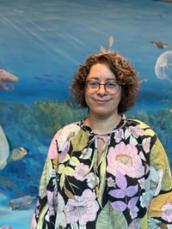
RESEARCHER: Maj-Britt Posserud studies how we can give children with autism a real chance at a good life. Photo: Private
Research that can make a difference
This is exactly what the ENACT research project aims to address. The goal is to give parents the tools they need to support their children – while also providing services with knowledge they can put to use. The long-term vision is a national framework ensuring that all parents are offered equal access to support, tailored to their needs.
The study looks at how parent training impacts stress levels, quality of life, child functioning, and use of services. Over time, the results could lead to improved services, better use of resources – and most importantly: a real chance for children with autism to thrive.
The project is led by Maj-Britt Posserud and is part of Kavli Trust’s Health Research Programme.
Currently, there are no robust tools for measuring quality of life in children with autism – so ENACT is developing its own. The researchers are also mapping how parents adjust work and finances to meet their child’s needs.
“What we’re doing now could lay the foundation for future policy and practice. Every new case feels like a PhD in itself – which is exactly why it’s so important to do this properly,” says Maj-Britt.
The Kavli approach: A mark of quality
The project is funded by Kavli Trust and has gone through their two-step application process – something Maj-Britt found both thorough and valuable.
“It’s rare in my field to receive such relevant and academically strong feedback. It gave the project real weight – and gave me confidence that we’re on the right path.”

Illustrative photo
Sheryl Holt/Pixabay
FACTS: What is the ENACT project?
What is the project about?
ENACT is the world’s largest research project examining how the parenting programme The Incredible Years – Autism Spectrum and Language Delays (IY-ASLD) can support parents – for the benefit of children, families, and society.
It is conducted as a multi-centre, randomised controlled trial where participants are randomly assigned to one of two groups – one receiving the IY-ASLD programme, and one receiving a shorter follow-up course developed specifically for this project. This approach allows researchers to fairly and safely evaluate what works best for families. It also ensures that more parents receive better follow-up, whether or not they take part in the study. For that reason, the project has already delivered significant benefits by increasing support for families.
Why is this important?
Parents of children with autism often face enormous challenges – but receive little support. The goal is to provide them with tools and confidence to help their children in the best possible way.
What are the researchers testing?
The project examines whether a structured parent training programme (IY-ASLD) is more effective than a shorter, standard follow-up course.
It measures outcomes including parental stress, child functioning, quality of life, and family use of health services – before, immediately after, and 12 and 24 months after the intervention. Interviews are also conducted to understand what parents find helpful or challenging in the different approaches.
Who is participating?
Parents of children aged 2 to 6 with autism from Bergen, Haugesund, and Trondheim. So far, over 160 families are taking part.
What do they hope to learn?
Whether parent training can make daily life easier – for both children and families. And which types of support work best for different families.