Listen to Fairy Tales from Around the World in Norwegian, Ukrainian, French, Uyghur, Swahili and Kven – All at Once!
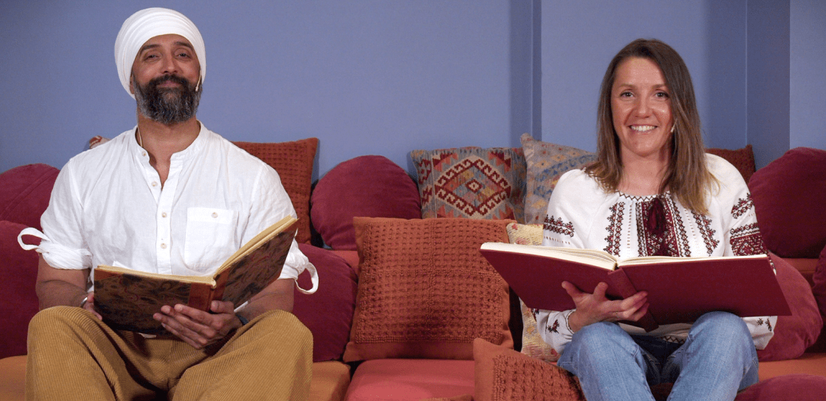
In the digital series Multilingual Storytime with Litteraturhuset in Oslo, fairy tales from around the world are told alternately in Norwegian and another language. Kavlifondet is a proud supporter of six films in the series, which aims to inspire a love of reading in new generations of children and young people.
"A wonderful offering for Kvens – we really appreciate it. We were deeply impressed by our member Osvald and his Kven language skills in reading fairy tales in Kven. We have embraced it with great pride, surprise and joy in the Kven community."
This was the written feedback from "Kven på Østlandet" when Litteraturhuset in Oslo launched Multilingual Storytime in Norwegian and Kven, featuring "The Emperor's New Clothes" read in both languages.

CEO Susanne Kaluza. Photo: Stiftelsen Litteraturhuset
– In Norway, many different people live together who collectively speak over 150 different languages! For us at Litteraturhuset, it is important to showcase the linguistic diversity we have in this country and to highlight multilingualism and multicultural experiences as a resource, says executive director of Stiftelsen Litteraturhuset, Susanne Kaluza.
Opening the Door to Multilingual Readers
With the initiative "Multilingual Storytime", Litteraturhuset particularly wants to reach bilingual children, and children and adults with minority backgrounds and a mother tongue other than Norwegian.
So far, they have produced 23 videos in 19 languages in the digital series.
The concept is simple but effective: fairy tales from different countries are told alternately in languages such as French, Ukrainian, Swahili, Kven and Uyghur, and in Norwegian.
This gives children the opportunity to hear fairy tales in Norwegian and their own mother tongue, or their parents' language.
The readers in the minority languages vary, while Litteraturhuset's resident storyteller, Jasdeep Singh Kalirai, reads the fairy tales in Norwegian.
All videos feature beautiful illustrations created especially for Multilingual Storytime.
Watch all the videos here!
Proud of the Films
In addition to the storytime in Kven, Kavlifondet has supported the production of five further films.
– We are very proud of these videos. Kavlifondet contributes to Multilingual Storytime as part of our initiative for inclusion and life skills for children and young people, says CEO of Kavlifondet, Ingrid Paasche.
An Important Tool
– Culture is an important tool for positive experiences and personal development, but also for building social skills that are essential for inclusion and participation, she continues.
– In addition to making literature from around the world accessible, Multilingual Storytime shows children with minority backgrounds that minority languages have a natural place in literary outreach, something we hope will also inspire a continued love of reading, says Paasche.
Wanting to Include More
With its multilingual offering, Litteraturhuset in Oslo has an overarching ambition to help ensure that culture is not reserved for a select few, but also includes children and parents with mother tongues other than Norwegian.
They have a stated goal of nurturing a new generation of readers, regardless of ethnic background or the size of one's wallet.
– We believe that events held in both Norwegian and a minority language simultaneously are important for strengthening language skills and a love of reading in children, says Kaluza at Litteraturhuset.
– It also lowers the threshold for participation for parents who are not themselves strong in Norwegian, but who have children in Norwegian kindergartens or schools, she continues.
Contributing to Strong Language Skills
The multilingual storytimes can contribute both to learning one's own mother tongue better and to improving Norwegian skills for young and old alike.
– Good mother tongue development is important for progress in all school subjects for children, and for general identity development for everyone. Moreover, it is an obvious advantage to master several languages, says Kaluza.
Storytellers
Stiftelsen Litteraturhuset
Positive Feedback
Litteraturhuset has received a great deal of positive feedback on the films, all of which are published on Litteraturhuset's own page for Multilingual Storytime.
"This was so fun for our girls, with a mum whose mother tongue is Norwegian and a dad whose mother tongue is Swahili – or 'the Kenya language' as the girls call it", writes a mother on Facebook after watching Goldilocks and the Three Bears read in Swahili and Norwegian with her daughters.
– We work hard to reach our target groups, so it is especially gratifying when we receive this kind of feedback, says marketing and communications manager at Litteraturhuset in Oslo, Aslaug Gaundal.
Underscoring the Importance
Gaundal mentions that they have also received less pleasant comments on social media, but from people outside the target group.
– That only serves to underline the importance of the project. As a society, we still have work to do to create understanding and tolerance for different backgrounds and cultures, she states.
Facts about Stiftelsen Litteraturhuset
- Stiftelsen Litteraturhuset is Europe's largest house of literature and the first to be established in Norway.
- Litteraturhuset is an independent foundation that works to spread interest in reading and books, protect freedom of expression, and contribute to a more knowledge-based public discourse.
- The foundation has a particular focus on reaching children, young people, and low-income families, and works to nurture a new generation of readers regardless of ethnic background or the size of one's wallet.
- The house's nearly 1,700 annual events attract around 125,000 audience members and are visited in person by around a quarter of a million people each year.
- Multilingual Storytime is one of Litteraturhuset's key initiatives. Read more about the project and see the house's other initiatives here.
Read more about the project and see mer om prosjektet and see the house's other initiatives here.
With support from Kavlifondet, Litteraturhuset has produced these episodes of Multilingual Storytime in 2023:
- French: "The Mitten" with Sarah Camille Ramin Osmundsen.
- Uyghur: "The Hare and the Tortoise" with Gulnar Imam.
- Kven: "The Emperor's New Clothes" with Tor Martin Osvald Josefsen.
- Swahili: "Goldilocks and the Three Bears" with Victor Kimathi Mati.
- Ukrainian: "The Rooster and the Two Mice" with Inna Kuts.
- Ukrainian: "The Mitten" with Inna Kuts.
Read more: Watch all the videos from “Multilingual Storytime” here.