Philanthropy that makes a difference?
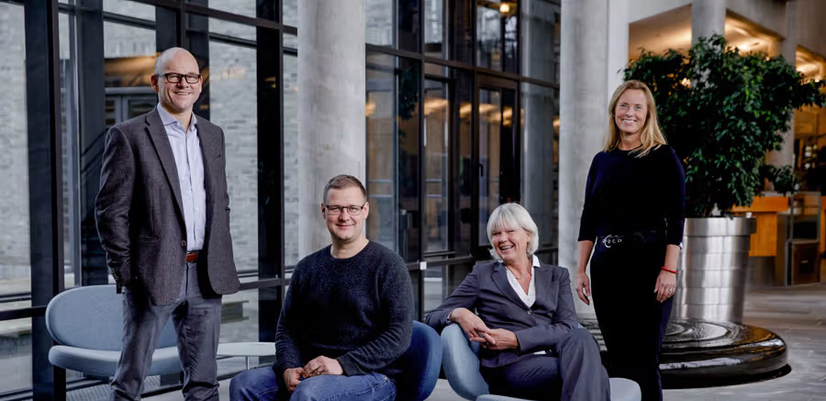
In this op-ed, Arild Bjørndal, Director of the Center for Evidence and Implementation (CEI), shares his reflections on the role philanthropy can play in addressing the major challenges of our time. The article is written in connection with this year’s Nordic Foundation Conference, taking place on 8–10 November.
By Arild Bjørndal
Professor, MD
Director of the Centre for Evidence and Implementation (CEI)
Foundations and companies can help address major societal challenges by donating money to good causes. But lasting change requires more than “spray and pray.”
Every year, charitable foundations—and a number of large companies—distribute billions of Norwegian kroner to non-profit causes in Norway. These are important resources with the potential to achieve significant impact. They can influence complex societal challenges where neither the public sector nor the market holds the solution.

Leading the work:
Grants do a great deal of good in many local communities. That is positive. This is where people live, where children grow up, and where life chances can be improved. Residents, volunteers, businesses and public services work together to create strong local communities. Private donors such as foundations and companies are a natural part of this ecosystem.
However, if foundations are to contribute to real and lasting improvement, they must be even more deliberate in prioritising which challenges they want to help solve, and in focusing on how change can actually be achieved. They need to come together in strategic partnerships and invest more funding per area over time. Foundations without large in-house expertise must collaborate with partners who understand the specific social issues involved, as well as implementation and scaling. Information should be gathered before initiatives begin—about what knowledge already exists—and afterwards, about what the efforts actually achieved.
Today, too much funding is spread too thinly. The result is a long list of individual projects that do good for some people in the short term, but rarely scale up or create systemic impact over time. Dedicated individuals are doing an incredible job across Norway, and we cannot do without them. But if philanthropy is to properly support these social entrepreneurs, it must do so in ways that promote robustness and sustainability.
There are many examples of foundations and companies setting ambitious goals and contributing to important initiatives. Preventing social exclusion, promoting inclusion, creating opportunities for children in vulnerable life situations, and improving young people’s mental health are all important objectives within the field of child development. Philanthropy should continue to identify and prioritise precisely these kinds of complex societal challenges. It can also help drive new solutions in areas such as climate and culture.
The Gates Foundation has demonstrated how an ambitious giving strategy can set the agenda and influence how governments and civil society operate. Another example is the Poverty Action Lab, funded by the Jameel Foundation. In partnership with centres of expertise, Norwegian philanthropists could achieve equally significant results—for example in improving children’s living conditions. There is no reason why Norway should not be known as the country in the world where it is unequivocally best to grow up.
Public authorities tend to invest in traditional measures. Philanthropy has greater freedom and should primarily serve as a source of funding for new ideas and creative approaches. Only in exceptional cases should philanthropic funding replace society’s responsibility to finance basic research, which by nature is long-term and fragmented. Likewise, philanthropy should generally avoid taking over the operation of services that are the responsibility of the public sector.
The state has limited value to offer philanthropy. It often struggles to bring relevant public stakeholders to the same table—for example those responsible for child development policy. It took years to arrive at priorities for a few major initiatives that have still not materialised locally anywhere. It is therefore far more important to collaborate with municipalities and voluntary organisations at the local level, and with businesses, which have extensive experience in problem-solving. Partnerships with strong knowledge environments that are committed to developing new and useful solutions can help bridge the gap between resources and results.
If we are to influence complex and entrenched problems, this requires prioritised, long-term efforts. A small project here and another there, with a one- or two-year time horizon, is not the way forward. Foundations must dare to prioritise and develop larger initiatives. These should be grounded in what we already know (including research), while also rewarding innovative capacity. Simple but reliable evaluation must be built in, along with conditions for effective implementation and scaling. Through partnerships with centres of expertise and collaboration with local actors such as municipalities and voluntary organisations, philanthropy can promote social inclusion, improve living conditions and enhance quality of life.
About the author
CEI runs the pilot project Children First! with support from the Kavli Trust. Together with the three Norwegian municipalities of Hå, Gausdal and Gjesdal, and their local communities, CEI works to strengthen cross-sector and interdisciplinary efforts for children at the local level.
Arild Bjørndal, Director of CEI, also chairs the advisory board for strategy in the Kavli Trust’s health research programme.
Note: This is an opinion piece. The views expressed are those of the author.