Feature profile: "We had to find our own way"
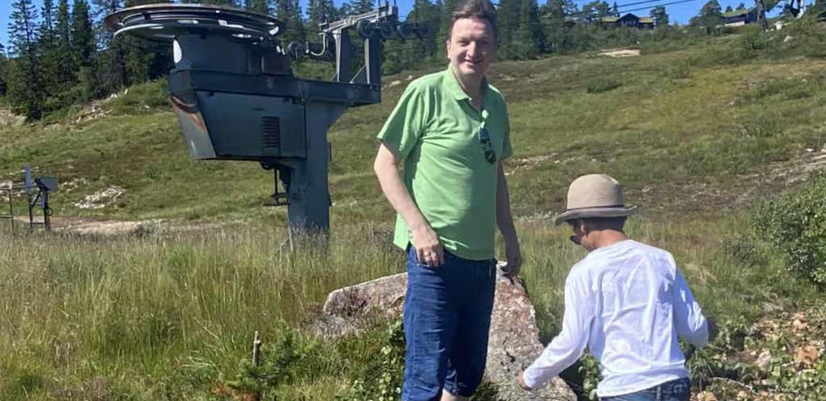
Father and son
Private
When their son received an autism diagnosis, a new daily life began for Vegard and his family. The diagnosis brought rights, but no one told them where to start. No one helped them put the pieces together.
It’s not yet six o’clock. Vegard quietly slips out of the bedroom. If he’s lucky, the youngest child is still asleep. Axel is already awake.
His wife left early. She works as a Hotel Executive Housekeeper and gets up before the city stirs. Vegard begins the day as he often does – acting as a one-to-one assistant, project manager, and dad in his own home.
“Axel needs help with almost everything,” he says.
“Clothes, food, brushing teeth.”
He states it as a simple fact, without complaint. It’s just the way it is.
Axel has autism.
A diagnosis – and chaos
Axel was three years old when the diagnosis came. They had noticed signs for some time: low interest in other children, limited social interaction. Could pandemic restrictions have explained it?
“The diagnosis was a turning point,” says Vegard.
“Not just because we gained rights, but because we finally had a language for what had made no sense before.”
But that language came without a manual.
“No one said: Here’s where you start. This is what you need. This is what you are entitled to. There were only forms, courses, and unfamiliar terms.”
“We received support, but we had to find out for ourselves what was available. I know many who don’t have the energy to navigate the jungle of systems. Who burn out. Where everything is about survival, not living.”
A social child – who doesn’t quite crack the code
Axel is seven now. He speaks in full sentences, explains what he wants and needs. A remarkable development for a boy who barely spoke before he was five.
Vegard talks about his son with warmth; pride shines through:
“He was reading fluently in Norwegian and English before he turned three. Recently he learned chess! He’s curious, social, and active. Loves music.”
A small smile.
“But he doesn’t always understand the social game. He seeks contact but doesn’t always know how to stay in the play.”
How about friends?
“He interacts with those around him, but doesn’t build deep relationships. He is drawn to older children who can meet him more on his terms.”
It’s not the child who is difficult
Vegard got involved early with the Norwegian Autism Association. This has been a crucial arena for Axel to participate in activities.
“I meet parents who are exhausted. Not because the child has a diagnosis, but because the system around them is too complicated. You don’t get guidance – you get responsibility.”
They attended every course they could find. One at a time. One topic at a time.
“Food. Toilet training. Language. You have to apply each time. Everything requires effort, initiative, and energy.”
He takes a deep breath.
“Many don’t have that energy. Then you’re left alone. It’s easy to become isolated.”
Shattered expectations
“We love Axel for who he is. But it’s okay to feel that life took a different direction than we had imagined,” says Vegard.
It’s not about wishing for another child. It’s about giving yourself space to mourn the expectations that fell apart. About all you have to give up, without knowing what will come instead.
The whole family is affected
“It affects all of us. Not just me and my wife, but siblings, grandparents, friends. The dynamics change.”
Vegard and his wife also have a two-year-old at home. A little brother who doesn’t yet understand that his older brother is different.
“He just looks up to Axel. Tries to do the same. Imitates. Wants to join in.”
The parents try to find balance – giving space to both, meeting each child on their own terms. It’s not always easy.
“It takes a lot. Logistics, energy, time. And through it all we also have to be parents – not just functionaries.”
ENACT: The game-changer
For the family, it was primarily about getting support in everyday life. By participating in the parent programme The Incredible Years (IY-ASLD), they also became part of the ENACT project – a research study examining the impact of parent guidance on families. That’s when the pieces fell into place.
“Everything was put in context. The child. The family. Daily life.”
And perhaps most importantly: the community with other parents.
“Meeting someone in the same situation. Sitting with a cup of coffee during the break and saying ‘us too’. It made us feel less alone.”
The parent guidance provided them with more than knowledge. It gave security. Structure. Community.
“If this were standard for all families with children who receive an autism diagnosis, many would not have to fumble for so long.”
He highlights Maj-Britt Posserud – child psychiatrist and consultant at Haukeland University Hospital – with respect in his voice. As head of the research project, her medical background allows her to take a holistic approach and draw on additional expertise when needed.
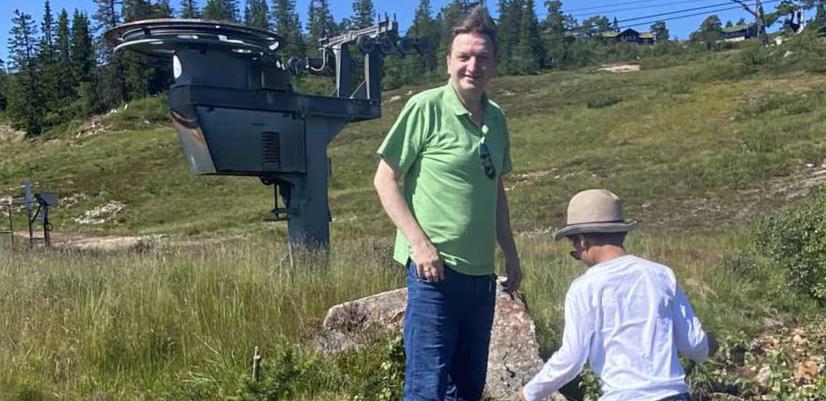
Father and son
Private
Openness – and a choice of community
Axel attends Sædalen Primary School, one of several “base schools” (a model where children are organised into small groups but share teachers and facilities) in Bergen, with a school structure that is not ideally suited for children with autism. But the school has been excellent at making adjustments. This has been crucial, because Axel thrives. Every morning he runs to the taxi.
At the first parent meeting, Vegard spoke up. He shared the diagnosis, what it meant, and what it could lead to.
“We wanted to make it easier for others to understand. If we don’t open the door, others might not dare to enter.”
The school was also allowed to inform the other children about what happens when Axel experiences a meltdown.
The result?
“The opposite of what you read in the newspapers. The children are kind to each other. When they are given explanations, they show understanding.”
But they haven’t had that conversation with Axel yet.
“He doesn’t feel different. Not yet.”
It looks simple
Routines. Mastery. Security.
“There’s enormous effort behind what people see from the outside. Many think the challenge is the diagnosis. But it’s the systems that are hard to navigate.”
He speaks loudly and decisively.
For Vegard, it’s no longer just about Axel. It’s about making the path easier for those who come after.
“If we want parents to cope over time, we need to stop making them responsible for figuring everything out themselves. It shouldn’t be a matter of luck who manages.”
An answer and a relief
When they received the diagnosis, the doctor asked: Are you ready for this?
“Our reaction was: It would have been worse to leave without it. The diagnosis gave us not only rights. It gave us a language. It made it possible to understand and to act.”
HIKING BUDDIES: Axel (7) and his dad Vegard walking hand in hand.
Facts: Vegard Mølstrevold
- Father of Axel (7), married to Gifty, living in Bergen
- Board member of the Autism Association (Autismeforeningen)
- Participant in the ENACT research project
- Works to improve systematic guidance for parents of children with an autism diagnosis
FACTS: What is the ENACT project?
Questions and answers about the project