Research into the effects of a life skills programme for schoolchildren
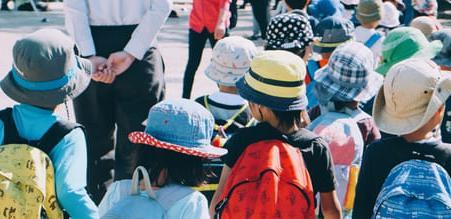
Schoolchildren
Kavli Trust’s health research programme has awarded NOK 9.6 million to researchers at the University of Manchester for their study of the school-based life skills programme Passport – Skills for Life.
The study will examine whether the Passport programme succeeds in strengthening children’s ability to manage their emotions, with the aim of reducing stress, loneliness and bullying during the important transition from childhood to adolescence.
Growing need
Dr Joao Santos at the University of Manchester will lead the practical implementation of the study.
“Kavli Trust has given us a fantastic opportunity to investigate the effects of a promising, school-based intervention for children’s mental health. By applying robust theoretical, methodological and analytical principles in the evaluation of this school-based intervention, we hope to make an important and precise contribution to the field,” says Santos.

Dr. Joao Santos at the University of Manchester.
“I am looking forward to seeing the impact this research will have on all participants, particularly in light of the growing need to improve children’s mental health and wellbeing.”
Widely used
Passport – Skills for Life is a school-based life skills programme designed to promote good mental health among children aged 9–11.
The programme was developed by Professor Brian Mishara at the Université du Québec à Montréal and is a widely used intervention in several countries to promote social and emotional learning among primary school children aged 9–11.
Teachers who have received specific training in the programme deliver Passport to the entire class.
The project will address the following questions:
- Does Passport have a meaningful effect on emotion regulation, bullying, loneliness, internalising symptoms (e.g. symptoms of depression and anxiety, social withdrawal), and peer support within the group?
- Are the effects of Passport sustained over time?
- Does the way in which Passport is implemented influence its effects on the areas listed above?
- Do some children benefit more than others from participating in Passport?
- Does Passport offer value for money?
- Is there an association between the effects of Passport on children’s stress levels and changes in their ability to manage their emotions?
60 schools and 2,000 pupils
The researchers will conduct a large, two-year randomised controlled trial involving 60 primary schools and more than 2,000 children in the Greater Manchester region of north-west England.
They will collect and analyse both quantitative and qualitative data.
“In addition to addressing the main research questions, the data we generate will also be used to expand our understanding of mental health development during the transition from childhood to adolescence,” says Dr Joao Santos, adding:
“For example, we will use the data to explore relationships between bullying, loneliness and wellbeing over time.”
“We are very pleased to be carrying out this important research, which will enable us to make significant advances in our understanding of whether and how school-based interventions can make a difference to children’s mental health during a vital period of their development,” says Professor Neil Humphrey at the University of Manchester.

Professor Neil Humphrey
Humphrey is the principal investigator on the project together with Professor Pamela Qualter. She is also enthusiastic about commencing the project:
“It examines whether a school-based intervention can have a positive effect on children’s mental health, and I am particularly excited about the focus on the role of loneliness and how this is linked to mental health gains and changes. This focus has been lacking in previous work,” says Qualter.

Professor Pamela Qualter
“Kavli Trust is pleased to announce this grant to the researchers at the University of Manchester,” says Inger Elise Iversen, CEO of Kavli Trust.
“To date, the results reported in practice-based knowledge and evaluations have been very positive. We look forward to contributing to more evidence-based knowledge about the effects of the programme, and to learning more about how and why it works,” says Iversen.
Project facts
- Project title: Passport to Success
- Project owner: University of Manchester
- Principal investigators: Professor Pamela Qualter and Professor Neil Humphrey
- Collaborating institutions: Common Room, Queen Mary University, University of Dundee
- Funding: NOK 9.632 million
- Project period: 2022–2025
Predefined knowledge gaps
The Passport project is one of three projects awarded funding through Kavli Trust’s health research programme call for proposals in 2021.
The three projects were selected from a total of 43 applications addressing one or more of the ten predefined knowledge gaps included in the call.
A thorough process
Each year, new knowledge gaps are identified through a thorough process.
The process begins with a strategic scientific committee conducting updated searches for systematic reviews in selected databases, with the aim of identifying relevant knowledge gaps in children’s and young people’s mental health.
“The committee identified 41 knowledge gaps for the 2021 call. These were then ranked by a user panel consisting of patients, their relatives and relevant healthcare professionals,” explains Jan-Ole Hesselberg, Head of Kavli Trust’s health research programme.
The 2021 call included the ten knowledge gaps ranked highest by the user panel, meaning that all applicants were required to design studies addressing one or more of the selected gaps.
Read more: See the 2021 call (closed) and all ten knowledge gaps here
“This process is designed to give everyone involved a voice in deciding which research projects are funded. It represents a democratisation of the research process, and we firmly believe that it increases the relevance of the research that receives funding,” says Hesselberg.
Knowledge gaps addressed by the Passport to Success study
The study addresses the following four of the ten knowledge gaps:
- What is the effect of psychotherapy on improving emotion regulation in adolescents?
- What is the effect of interventions to reduce bullying and cyberbullying among children and adolescents?
- What is the effect of interventions to reduce loneliness among children and adolescents?
- What is the effect of school-based psychosocial interventions to promote mental health among children and young people?