Ten years of Climate Breakfast

Tuesday, 15th of October marks ten years since the Norwegian Climate Foundation, with support from the Kavli Trust, organised Climate Breakfast for the first time. The 10th anniversary will be marked with a Climate Breakfast that takes stock of the major, overarching questions surrounding the climate challenges the world is facing today.
- What is the status of climate change, the energy transition, and emissions reductions globally, in Europe, and in Norway over the past ten years?
- What must we do over the next ten years in Norway for emissions cuts to have a real impact?
These are the questions that will be addressed in the Mirror Hall at the Grand Hotel in Oslo on Tuesday, 15th of October, from 8:00 a.m. onwards - exactly ten years after the very first Climate Breakfast was held.
Register for the anniversary breakfast at the Grand Hotel or attend digitally here!
You will also find the full programme at the bottom of the article.
– Great joy
Norsk klimastiftelse is headquartered in Bergen and has, as its statutory purpose, "through its own activities, including the dissemination of knowledge and proposals from recognised research and knowledge communities, to contribute to measures - both public and private - that lead to the rapid reduction and eventual cessation of human-caused greenhouse gas emissions."
"Climate Breakfast strongly supports our mission," says Anne Jortveit.
"It was a source of great joy when the Kavli Trust chose to support us. We are very grateful to the Kavli Trust for making it possible for us to invite people to this sharing of knowledge," she says.
– Important meeting place
"We congratulate Norsk Klimastiftelse on ten well-executed years of Climate Breakfast," says Ingrid Paasche, CEO of the Kavli Trust.
"Through Climate Breakfast, the Norwegian Climate Foundation has created an arena where key stakeholders from multiple fields find it useful, interesting, and engaging to come together for knowledge-based, factual discussions about some of the most important issues of our time. Combined with consistently high-quality execution, we belive this is a key success factor. It is very encouraging to see the broad support for Climate Breakfast today," she continues.
"Meeting places like this are vital for promoting dialogue, cooperation, and collaboration - elements that are absolutely necessary to address the enormous challenges we face. The Kavli Trust is very proud to have supported this initiative from the very beginning," Paasche says.

Ten years of collaboration
Hanne Eide Andersen/Kavlifondet
A popular event
The agreement with the Kavli Trust stipulated that at least four breakfasts would be held each year in Oslo, and two in other locations around the country.
"Each time, they were to bring together at least 25 participants who would benefit from learning more about everything from the consequences of climate change to possible climate solutions, and about what can influence the pace of the energy transition," Jortveit explains.
Ten years later, the event is firmly established as a popular and well-regarded arena for knowledge sharing, dialogue, and discussion about the climate challenges we face - and what we must do to solve them.
"We have built Climate Breakfast slowly but steadily over the years, and now there are usually just over 100 people in the room, with an average of 200 people following the entire breakfast digitally," Jortveit says.
Knowledge-based conversations with an "inside voice"
In total, around 70 Climate Breakfast events have been held. The concept has remained the same throughout: two hours during which researchers and other subject-matter experts present their knowledge related to the climate challenge, the energy transition, and how emissions can be reduced, with an audience present in the room.
Representatives from relevant industries are often also involved, as are politicians with knowledge of and interest in the topic being addressed.
All Climate Breakfast events are free of charge, streamed live, and available as recordings on the Climate Foundation's website. And perhaps most importantly:
"The breakfasts are conducted in a calm, respectful tone, and each topic is examined from multiple perspectives," says Anne Jortveit.
"We believe that knowledge and constructive dialogue between actors with different viewpoints and opinions can create more common ground and a shared understanding of what is required to solve the climate crisis," she says.
– Voices from all sides matter
"We know that for some, cutting emissions may be purely beneficial, while others must bear the costs of potential losses in jobs and value creation. Voices from both sides must be part of the conversation on how we achieve emissions reductions and transition in Norway," Jortveit emphasises.
"The thought of all the human suffering that can be avoided - and all the chaos that can be reduced - if the energy transition away from oil, coal, and gas moves faster, is a major source of inspiration in our work on climate solutions and in organising the breakfasts," she says.
– We should have come further
The ten-year anniversary will therefore focus on how far we have come with the energy transition since its launch a decade ago.
Jortveit believes that many had expected - and hoped - that the world would have made more progress than we see today.
"Many of us probably did not imagine that the enormous and dramatic consequences of global warming would hit so hard already," she says, referring to drought and water scarcity, catastrophic floods, and deadly wildfires.
"We have, of course, experienced all of this before, but these disasters are happening more frequently and with far greater intensity than in the past," she says.
A great deal of positive progress globally
Jortveit emphasises that a great deal of positive progress has also been made globally over the past ten years.
"To reach the climate targets, the use of oil, coal, and gas must gradually decline. That requires alternatives that are affordable enough to compete on price. In that regard, it is good news that more than half of all newly sold cars in China are now electric vehicles. This reduces the need for many barrels of oil each year," she points out.
"The price of solar energy has fallen far more than anyone could have predicted ten years ago, which reduces the need for coal and fossil gas to generate electricity," she continues.
Low battery costs, which are crucial for storing electricity in vehicles, households, and in many places also within the power sector, make it possible to store power that can be used when wind and solar are not supplying electricity to the energy systems.
"So there are many encouraging signs, but the pace is so frustrating. It is far too slow!" Jortveit says.
Ten years since the Paris Agreement in 2025
"Next year marks ten years since the Paris Agreement was signed, to great joy and optimism for many around the world. However, since then Norway has not managed to cut its own emissions in line with the ambitions of the agreement. Based on current trends, Norway will not reach its 2030 target until 2048," Jortveit says.
She points out that Norway is lagging significantly behind developments in the EU, where per capita emissions are well below those in Norway.
"Globally, emissions have increased. The world has not yet reached peak emissions," she states.
Much that is worth fighting for
At the same time, floods, fires, droughts, and other extremely dramatic events in recent months have shown us that climate change is taking lives and destroying values and livelihoods.
"Everyone working on climate solutions and the energy transition, each in their own way, therefore has much that is worth fighting for. At the Climate Foundation, we are fortunate to be able to work on this every day - not least thanks to the support of the Kavli Trust," Jortveit says.
Read more
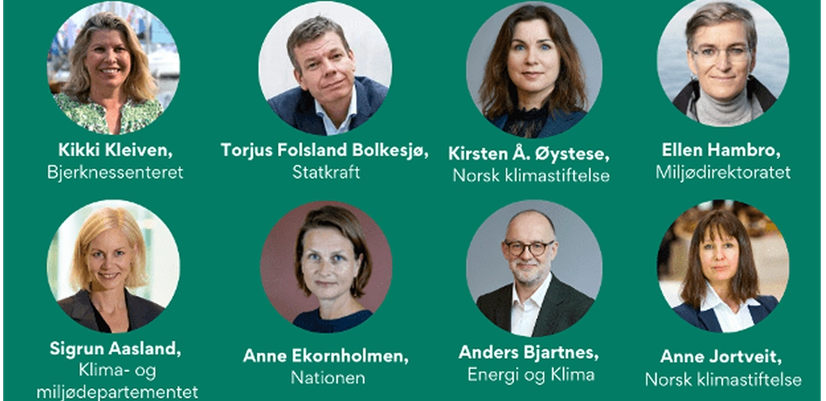
Programme for Climate Breakfast 15th of October 2024
- The world: The status og global emissions, global temperature rise and the consequences of climate change. Opening remarks by Kikki Kleiven, climate scientist and Director of the Bjerknes Centre for Climate Research.
- Europe: In recent years, the EU has undoubtedly taken on the role as the world's climate leader. What is the status of Europe's energy transition over the past ten years, and is Europe on track to meet its climate ambitions towards 2023 and 2035? Opening remarks by Torjus Folsland Bolkesjø, Chief Analyst and Head of Global Power Market Analysis at Statkraft.
- Norway: How far has Norway come in the transition over the past ten years, and what must be achieved in the next decade? Opening remarks byKirsten Å. Øystese, Project Manager for tilnull.no at the Norwegian Climate Foundation.
- What emissions reductions are possible in Norway towards 2035? Which policy instruments can help accelerate the transition? Where are the biggest barriers? A conversation with Ellen Hambro, Director of the Norwegian Environment Agency, based on the report Climate Measures in Norway: Knowledge Base 2024.
Panel participants include, among others:
- Sigrun Aasland, State Secretary for the Labour Party at the Ministry of Climate and Environment.
- Anne Ekornholmen, Political Editor at Nationen.
Summary:
- Where will the major political battles be fought in the years ahead if Norway is to increase the pace of the transition? Closing remarks by Anders Bjartnes, Editor-in-Chief of Energi og Klima and Norsk klimastiftelse.
The event will be chaired, as usual, by Anne Jortveit, Project Manager for Climate Breakfast and Deputy Chair of Norsk klimastiftelse.