Will provide life skills programme to 4,500 children in collaboration with schools
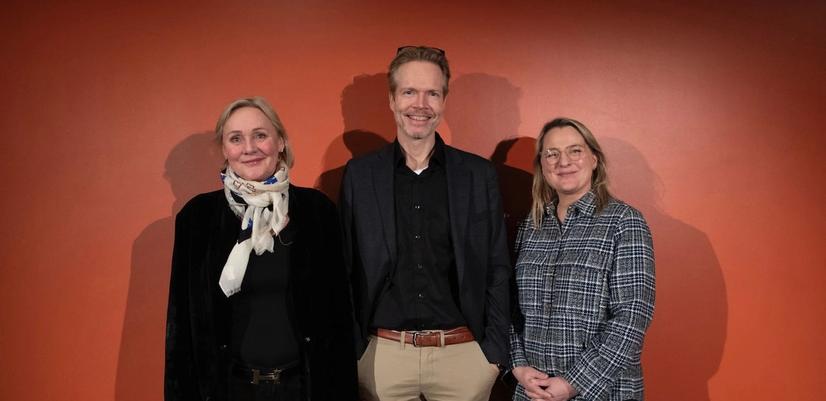
With support from Kavli Trust, Voksne for Barn (Adults for Children) will make the life skills programme Passport – Life Skills at School available to 4,500 children across Norwegian schools.
The total support of NOK 2 million from Kavli Trust enables Voksne for Barn to further develop, implement and expand Passport to ten new municipalities and 30 individual schools each year throughout 2022–2023.
“Over the next two school years, we aim to reach at least 4,500 pupils. We know how important it is to work on good mental health where children are, which is why Voksne for Barn always collaborates with schools,” says Signe Horn, Secretary General of Voksne for Barn.
“The support from Kavli Trust allows us to provide training and guidance in Passport to municipal resource groups, so that municipalities themselves can deliver the programme and establish support systems to run Passport in their schools,” she adds.
In addition to Kavli Trust, both the Norwegian Directorate of Health and the Norwegian Directorate for Education and Training are contributing financial support.
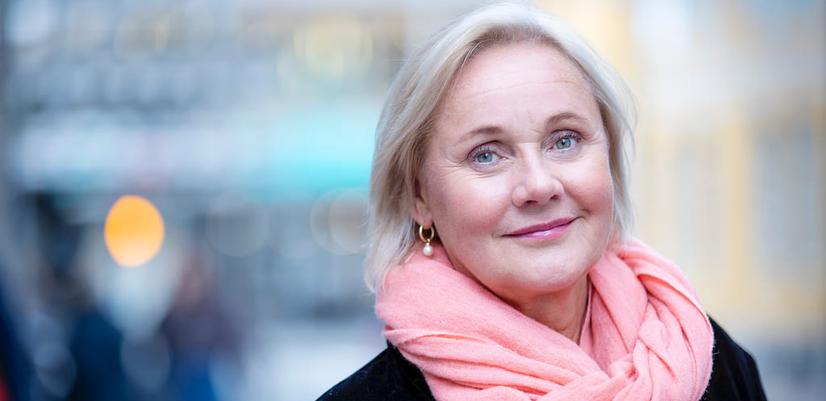
Secretary General of Voksne for Barn
Bo Mathisen/Voksne for Barn
Learning coping strategies for stress
Passport is designed to promote good mental health and social-emotional competence among children in the middle grades of school.
The programme equips teachers, school health services and school leadership with the knowledge and tools to work systematically on mental health and life skills over time.
At the same time, municipal professionals in health, educational psychology services, and other support systems gain access to tools for identifying children who require additional support.
Friendship and conflict management
The programme consists of 29 sessions, in which children, together with their teacher and classmates, explore topics such as emotions, friendship, fairness, conflict resolution and life changes.
Each session involves discussions and activities with a particular focus on coping strategies for stress and challenging situations.
The programme also aims to prevent bullying by fostering supportive relationships, inclusion, and friendship within the class.
Comic strip for coping
In every session, children read a comic strip illustrating the theme, and then participate in activities designed to help them recognise and practise different coping strategies.
While the comic depicts a fantasy world, the classroom activities address real-life situations that children may encounter.
“Children learn how to handle both positive and difficult emotions and what constructive ways there are to tackle challenging situations,” says Signe Horn, adding:
“To involve parents, information materials and a home activity have been developed for each of the five themes in Passport.”
Positive results
“Kavli Trust wants all children and young people to experience safety, mastery, and inclusion. Passport contributes to this for many of the children participating, and experience so far indicates that it is an effective tool in life skills education,” says Inger Elise Iversen, CEO of Kavli Trust.
She points to positive results from a pilot project in Norway and research from other countries.
“Research will now also be conducted in Norway during the project period in which Kavli Trust is involved. We look forward to following the rollout in more Norwegian schools and hope it benefits many,” Iversen continues.
“Passport aligns closely with Kavli Trust’s funding strategy. Initiatives that promote good mental health among children and young people through life skills education are a top priority,” explains Rune Mørland, Head of Strategy and Development at Kavli Trust.
Collaboration
Lise Skjæraasen
Developed in Canada
Passport was developed at the University of Quebec, Canada, funded by the Canadian Public Health Institute, by a multidisciplinary team led by Professor Brian Mishara, a specialist in suicide prevention.
It took five years to develop the programme, involving more than 3,000 children, their teachers, and parents.
Today, the programme is implemented in several countries, and Kavli Trust also supports its rollout in UK schools through the organisation Partnership for Children.
Voksne for Barn has conducted two pilot projects with Passport in Norway, one of which took place in 2019–2020 with support from Kavli Trust. Around 700 pupils and 40 teachers, school leaders, and school nurses participated.
Evaluations of the pilots showed high satisfaction among pupils, and also among teachers.
Read more: The evidence base for Passport
Digitalised during the pandemic
Like many other organisations, Voksne for Barn accelerated the digitalisation of its work during the pandemic. This includes the Passport programme’s digital tools, and a revised and updated version will now be implemented in many schools with support from Kavli Trust.
Voksne for Barn will, through dedicated events and a report, share experiences from school authorities, school staff, school health services, pupils, and parents on how the programme has worked over the two years.
Facts about Voksne for Barn
- Non-profit membership organisation advocating for children’s and young people’s needs, interests, and rights in relation to mental health and upbringing
- Established in 1960 as Mental Barnehjelp
- Main objective: to promote good mental health among children and young people and prevent psychological problems
- Views schools as a key arena for health-promoting work, with long experience collaborating with primary, lower secondary, and upper secondary schools
- Has implemented and run school programmes such as Zippy’s Friends and The Dream School, providing tools and methods to systematically work on mental health and life skills for all pupils
- Provides guidance and support to parents on upbringing, school and kindergarten issues, mental health, and caregiving topics
- Runs professional development initiatives for staff in health, social, and child services
- Advocates for children and young people, promoting their right to participation
Source: Voksne for barn
What is life skills education at school?
- In Norway, public health and life skills has been introduced as an interdisciplinary theme in schools, with the aim of giving pupils competencies that promote good mental and physical health and enable them to make responsible life choices.
- During childhood and adolescence, the development of a positive self-image and a secure identity is particularly important. Societies that facilitate healthy choices for individuals have a significant impact on public health.
- The Norwegian Directorate for Education and Training defines life skills as: “the ability to understand and influence factors that are important for managing one’s own life.”
- The curriculum aims to help pupils cope with successes and challenges, as well as personal and practical difficulties, in the best possible way.
- Relevant topics include physical and mental health, lifestyle, sexuality and gender, substance use, media habits, consumption, and personal finance.
- Life skills education also addresses values, the meaning of life, interpersonal relationships, setting and respecting boundaries, and managing thoughts, emotions, and relationships.
Source: Norwegian Directorate for Education and Training (Utdanningsdirektoratet)