Holiday time for families (The Salvation Army)
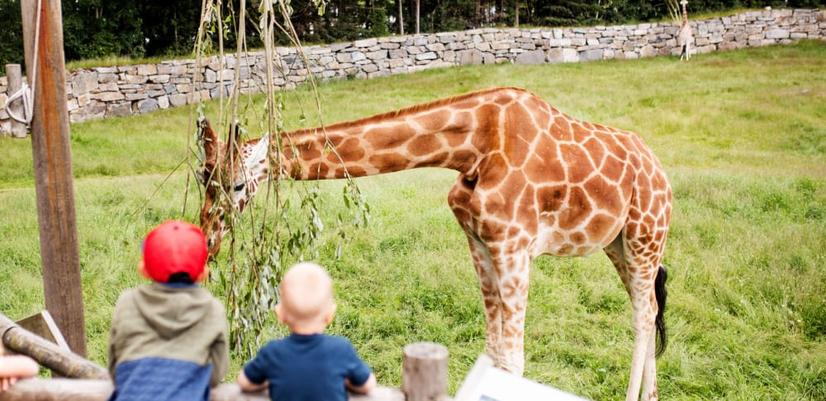
The zoo
The Salvation Army, Norway
Kavli Trust is joining forces with The Salvation Army to ensure that, in 2022, free holiday programmes can continue across Norway for families living on low incomes. Kavli Trust is supporting the initiative with NOK 1 million next year.
Allocated grants
1 000 000
NOKRecipient
The Salvation Army, Norway
Project
Holiday time for families
Project period
2022
2022
Allocated grants
1 000 000
NOKAbout the project
“We already have solid experience in providing holiday experiences for families with children who would otherwise not have had these opportunities. It is great to receive such a substantial contribution from Kavli Trust for this purpose, as it helps us reach many more families,” says Tone Berg, Project Coordinator at The Salvation Army (Norway) for the project Holiday time for families.
Kavli Trust is supporting the programme with NOK 1 million in 2022.
A growing number of children in low-income households
Berg points out that an increasing number of children in Norway are growing up in households with persistently low incomes.
In 2019, 115,000 children lived in households with persistent low income. This represents 11.7 per cent of all children in Norway, and around 4,000 more children than the year before, according to Statistics Norway, the national statistics office.
As a result, many children in Norway today grow up without the opportunity to go on holiday.
“The Salvation Army works closely with many of these families. That is why it is especially rewarding that, in various ways, we can help to improve everyday life and create positive memories for several thousand children and adults. Many thanks to everyone at Kavli for supporting The Salvation Army’s work with families,” says Berg.
Sharply increasing demand
The Salvation Army has seen a sharp increase in demand for its services over the past two years. The effects of the pandemic have meant that even more parents were unable to give their children the holiday they wanted in 2020 and 2021.
“Families on low incomes often dread the summer, as financial constraints largely determine what it will be like,” says Berg.
“At The Salvation Army, we focus on inclusion and community, and we aim to prevent social exclusion and loneliness. Giving more families the opportunity to go on holiday is one of several important measures in this context,” she continues.
Reaching those with the greatest need
Guro Sundsby is responsible for project grants in Norway at Kavli Trust.
“Kavli Trust seeks to promote good mental health among children and young people through effective preventive measures that foster inclusion and prevent social exclusion. Holidays are important for everyone, and it is important for families to have a shared holiday experience and a break from everyday life together,” says Sundsby.
She emphasises that holidays are also important for children’s and young people’s sense of normality, belonging and connection with wider society.
“It is important to facilitate low-threshold, free activities that everyone can take part in. The Salvation Army is in a unique position in terms of its close contact and strong ties to the poorest and most vulnerable people in local communities across the country. They reach families where the need is greatest, as part of a comprehensive range of support provided throughout the year. We are pleased to contribute to their work so that they can offer holiday opportunities to more families in 2022,” says Sundsby.
The pandemic led to more local initiatives
Traditionally, family holidays have been organised for four weeks each summer at The Salvation Army’s own facilities on Jeløya, an island in south-eastern Norway, and at Holmavatn, a holiday centre in western Norway. These camps have been coordinated by The Salvation Army at national level.
When the pandemic in 2020 made it impossible to run these camps, local Salvation Army units began organising local holiday activities for the same target group.
Local organisation made it easier to adapt to the infection control measures in force at any given time.
“The Salvation Army in Trondheim organised overnight trips for some families, in addition to activity weeks in the city. The Salvation Army centre in Grønland, for example, visited Bjørneparken with 110 participants. Others travelled with Hurtigruten or visited Dyreparken,” says Tone Berg.
“As a result, more families have been offered experiences and activities in their local area since the start of the pandemic. Local group activities also contribute to the development of new relationships and friendships between families and children in the local community,” Berg adds.
Local holiday and activity programmes have also been offered during the autumn, winter and Christmas school holidays throughout the pandemic.
By extending the programme to local venues, The Salvation Army has also been able to reach a larger number of children and young people with holiday activities.
“Both centrally organised and regional and local holiday activities are planned for next year as well,” Berg explains.
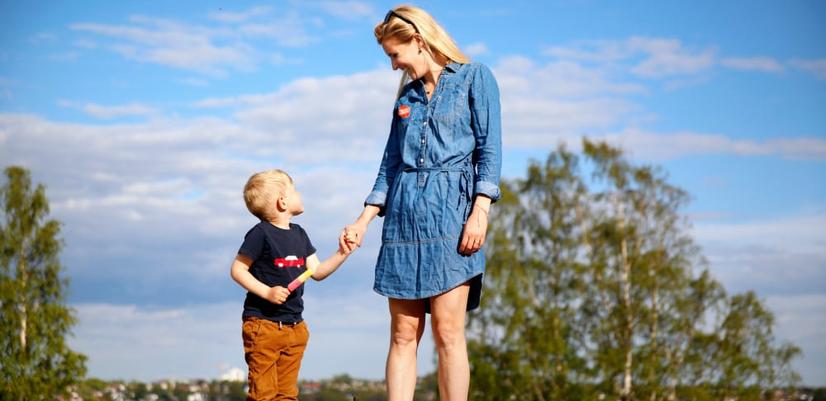
Summer's day
The Salvation Army, Norway